
Vestibular Physiotherapy • Langley, BC
BPPV Treatment in Langley
Personalized assessment and physiotherapy for positional vertigo, dizziness and balance problems — with treatment guided by your symptoms and clinical findings.
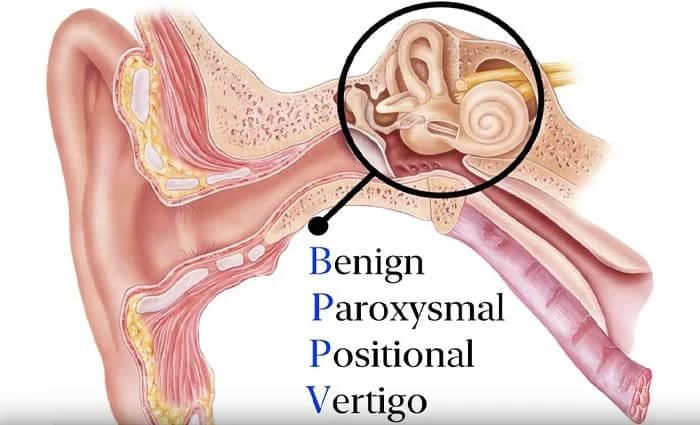
Understanding BPPV
Why can BPPV make the room feel like it is spinning?
Benign paroxysmal positional vertigo (BPPV) is one of the common vestibular causes of dizziness. It can happen when tiny calcium carbonate crystals in the inner ear become displaced into a semicircular canal and send inaccurate signals about head movement.
The result can be brief episodes of vertigo when you change position — for example, rolling over in bed, looking up or bending forward.
If dizziness or imbalance is affecting your everyday activities, a proper vestibular assessment can help determine whether BPPV is contributing to your symptoms.

Recognizing the pattern
Common BPPV symptoms
BPPV symptoms are often closely linked to changes in head or body position. Common experiences include:
Positional vertigo
A brief spinning or movement sensation when changing position or moving the head.
Dizziness & nausea
Dizziness may occur with positional changes and can sometimes be accompanied by nausea.
Balance difficulty
Some people feel unsteady or less confident walking or moving after an episode.
Assessment & treatment
How BPPV physiotherapy works
Treatment depends on what your assessment shows. When BPPV is identified, repositioning manoeuvres can be used to guide displaced inner-ear particles toward their appropriate location.
Understand the symptoms
Your physiotherapist reviews onset, triggers, balance, walking and relevant history.
Check positional responses
Where appropriate, positional and vestibular testing helps identify the likely source of symptoms.
Reposition when indicated
Canalith repositioning manoeuvres may be used when the assessment supports BPPV.
Restore confidence
Vestibular exercises or balance rehabilitation may be added when clinically appropriate.
Beyond repositioning
Vestibular rehabilitation for lingering dizziness and imbalance
If symptoms persist after BPPV treatment, or if assessment identifies another vestibular or balance problem, rehabilitation can be tailored to the person's findings and goals.
- Balance and coordination retraining
- Gaze stability and visual-vestibular exercises where appropriate
- Movement and walking confidence
- Individualized home exercises and activity guidance
Connected care
When dizziness needs a broader rehabilitation approach
Dizziness and balance problems can have different causes. Divine Care's rehabilitation services can connect you with the appropriate pathway based on your assessment.
Vestibular Rehabilitation
Assessment and rehabilitation for vertigo, dizziness, visual-vestibular symptoms and balance difficulties.
View Vestibular Rehab →Concussion Management
For dizziness, balance or visual symptoms that began after a concussion or head injury.
View Concussion Management →Balance & Fall Prevention
Rehabilitation focused on balance, coordination, mobility and confidence when fall risk is a concern.
Explore Fall Prevention →BPPV treatment in Langley
What to expect at your assessment
Discuss
We discuss when your dizziness started, what triggers it and how it affects daily activities.
Assess
Your physiotherapist may assess balance, walking, eye movement, neck movement and positional responses.
Explain
You receive a clear explanation of the findings and the most appropriate treatment pathway.
Frequently asked questions
BPPV treatment FAQs
What is BPPV?
BPPV stands for benign paroxysmal positional vertigo. It is a vestibular condition in which displaced inner-ear particles can cause brief episodes of vertigo with certain movements or position changes.
What does BPPV treatment involve?
When BPPV is identified, treatment may include canalith repositioning manoeuvres. Vestibular exercises or balance rehabilitation may also be recommended when appropriate.
What can trigger BPPV symptoms?
Symptoms are commonly associated with changes in head or body position, such as rolling over in bed, looking upward, bending forward or changing position.
How many sessions will I need?
The number of sessions varies according to the individual and the underlying condition. Some people with accurately identified BPPV improve after a small number of treatment sessions.
Do I need a doctor's referral?
A doctor's referral is generally not required to book physiotherapy at Divine Care Physiotherapy. Your extended health plan may have its own requirements for reimbursement.
Ready to take the next step?
Book a BPPV assessment in Langley
If positional vertigo, dizziness or balance problems are interfering with your day, an assessment can help clarify the likely cause and the appropriate rehabilitation pathway.
D109 – 20159 88 Ave, Thunderbird Village, Langley, BC V1M 0A4