
Dry Needling & IMS in Langley, BC
Targeted intramuscular techniques for selected muscle tightness, trigger points and musculoskeletal pain — delivered as part of an individualized physiotherapy plan.

Dry Needling, IMS & Functional Dry Needling
Dry needling is a broad term for techniques using a thin, sterile solid-filament needle to target specific muscles or soft tissues identified during assessment. No medication is injected.
Intramuscular Stimulation (IMS) is a specific approach to intramuscular needling that considers the relationship between the nervous system, muscle tightness and pain.
Functional Dry Needling (FDN) considers functional movement and movement impairments when identifying areas of muscle dysfunction that may contribute to pain, tightness or restricted movement.

Target the Muscle, Then Build Better Movement
During treatment, your physiotherapist identifies the muscle or tissue to address through assessment and palpation. A needle is then inserted into the selected area using an approach appropriate to your presentation.
A brief local twitch response can occur when a needle reaches a tight or irritated area of muscle. Depending on the individual, treatment may influence local circulation, muscle tone and pain-modulating mechanisms.
Similar Needles, Different Treatment Frameworks
Dry Needling / IMS
Generally based on musculoskeletal anatomy and used to target specific muscles and soft tissues identified during a physical assessment.
Acupuncture
Traditionally associated with Traditional Chinese Medicine and its own diagnostic and treatment framework.
Which Is Appropriate?
Your provider can discuss the differences and determine which approach or combination fits your symptoms and goals.
Explore Acupuncture →Conditions Where IMS & Dry Needling May Be Used
Dry needling is not appropriate for every condition or every patient. Following assessment, it may be included in a broader plan for selected muscle and joint-related problems.
Shoulder & Rotator Cuff
May address muscle tightness alongside mobility and strengthening work.
Tennis & Golfer's Elbow
May be combined with progressive loading and rehabilitation.
Neck & Back Pain
May target muscular contributors to persistent pain and restricted movement.
Headaches & Muscle Tension
May be considered when muscular tension contributes to symptoms.
Sciatica
May form part of a broader assessment and movement-based rehabilitation plan.
Hip & Knee Osteoarthritis
May complement exercise and functional rehabilitation where appropriate.
Patellofemoral Pain
May be combined with movement retraining and lower-limb strengthening.
Muscle Strains & Tightness
May help address selected areas of muscular dysfunction.
Tendinopathy & Shin Splints
Can be considered alongside loading and rehabilitation strategies.
A Conservative, Assessment-Led Approach
Your physiotherapist first reviews your movement, symptoms, pain pattern and relevant medical history. If needling is appropriate, the treatment area is assessed and the approach is adjusted to your response.
You may feel a brief prick followed by a deep ache, cramp or twitching sensation. Some people experience muscle soreness for around 24–48 hours afterwards, similar to the feeling after a hard workout.
If you experience severe, worsening or unusual symptoms, contact your healthcare provider for advice.
Before Treatment
Discuss your symptoms, health history, medications and any concerns about needles.
During Treatment
The therapist identifies the target tissue and starts conservatively, adjusting according to your response.
After Treatment
Mild temporary muscle soreness can occur. Your physiotherapist may prescribe movement or exercise to continue your rehabilitation.
Who Should Discuss Dry Needling With Their Physiotherapist?
Dry needling and IMS are not suitable for everyone. Tell your physiotherapist if you take medication that may affect bleeding, are pregnant, have a skin condition or infection near the treatment area, have relevant health conditions, or have significant anxiety or fear related to needles.
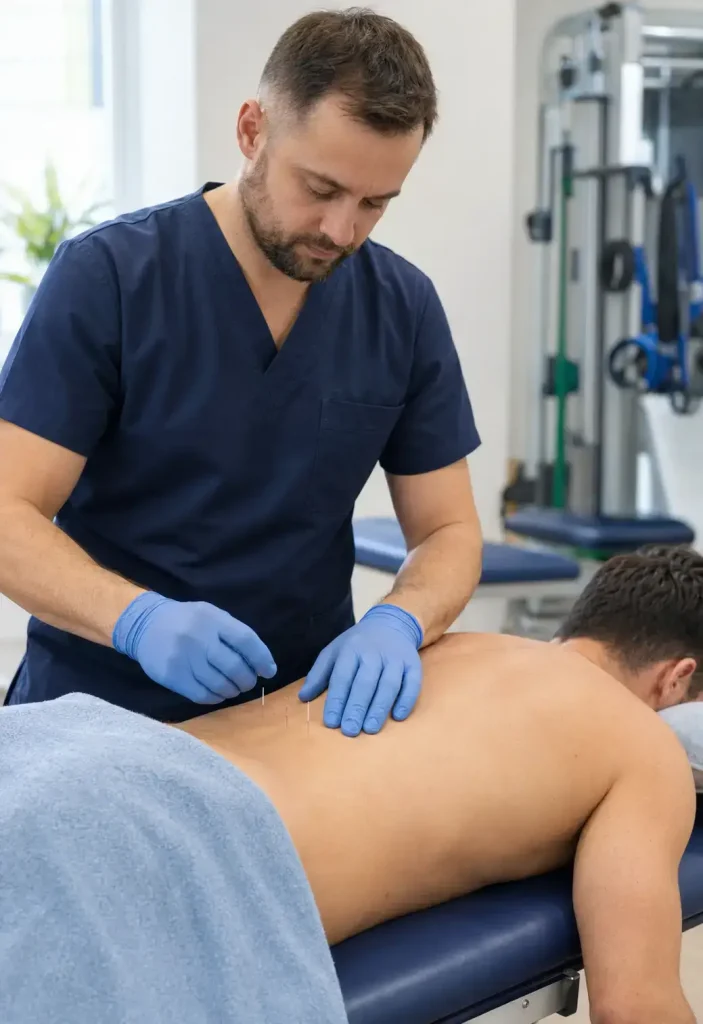
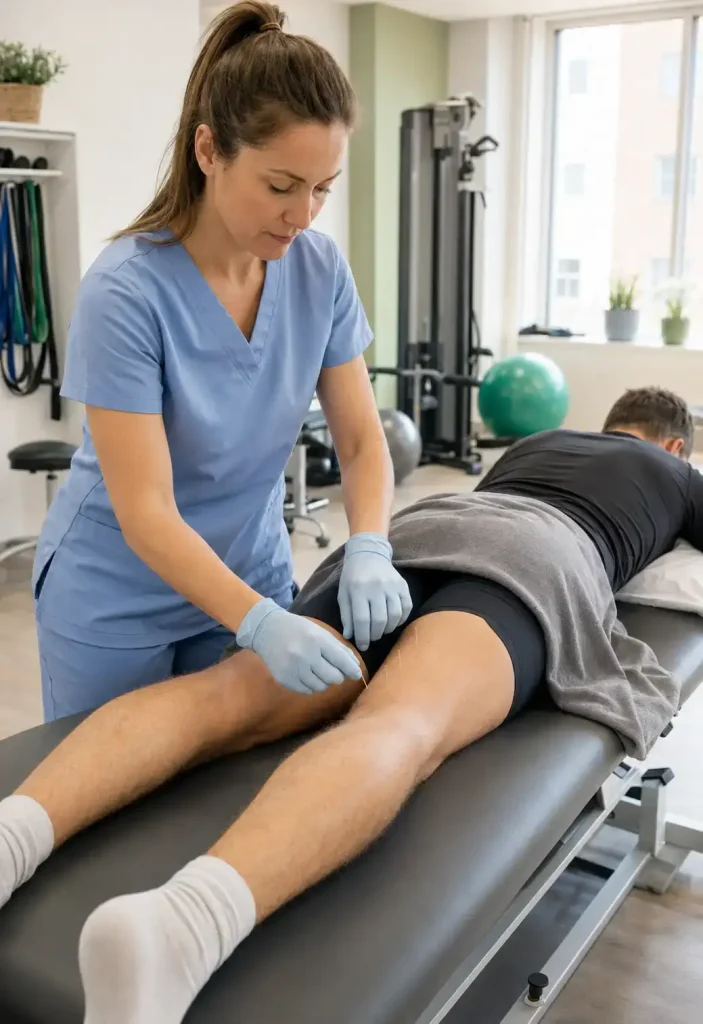
Targeted Needling for Different Areas of the Body
The treatment area and technique are selected after assessment. These images reflect the range of treatment applications shown on the current Divine Care page.

Dry Needling Works Best as Part of Rehabilitation
Needling can be one component of a larger physiotherapy plan. Depending on your condition, Divine Care may combine it with manual therapy, exercise, active rehabilitation or other treatment modalities.
Musculoskeletal Physiotherapy
Assessment and treatment for pain, stiffness, injury and movement limitations.
Explore Musculoskeletal Physio →Sports Physiotherapy
Return-to-sport rehabilitation, strength, mobility and functional progression.
Explore Sports Physio →Shockwave & Laser Therapy
Other modalities may be considered when appropriate for selected musculoskeletal conditions.
Explore Shockwave Therapy →How Your Treatment Pathway Works
Assess
Understand symptoms, movement, muscle tightness and functional limitations.
Plan
Decide whether IMS, dry needling or FDN is appropriate.
Treat
Use a targeted, conservative needling approach based on your assessment.
Rebuild
Progress exercise, movement and functional capacity as part of rehabilitation.
IMS & Dry Needling Questions
Do I need a doctor's referral for IMS or dry needling?
No. Divine Care states that a doctor's referral is not required to book physiotherapy. If your physiotherapist identifies something requiring medical input, they can recommend appropriate follow-up.
Does dry needling hurt?
Most people find it uncomfortable rather than painful. A brief prick, aching, cramping or twitching sensation can occur depending on the technique and treatment area.
Is dry needling the same as acupuncture?
No. Although similar fine needles may be used, dry needling and IMS are generally based on musculoskeletal anatomy, while acupuncture is traditionally associated with Traditional Chinese Medicine.
How many sessions will I need?
There is no fixed number. Your physiotherapist will base recommendations on your condition, progress, response and rehabilitation goals.
Can dry needling be combined with other physiotherapy?
Yes. It may be combined with manual therapy, exercise therapy, active rehabilitation and other modalities when appropriate.
How long can soreness last after dry needling?
Mild muscle soreness for 24–48 hours can occur in some people. Your physiotherapist will explain what to expect and what to do following treatment.
Could IMS or Dry Needling Be Part of Your Recovery Plan?
Book an assessment at Divine Care Physiotherapy in Langley. Your physiotherapist can determine whether needling is appropriate and explain the options.
Dry Needling & IMS in Langley, BC
D109 – 20159 88 Ave, Thunderbird Village, Langley, BC V1M 0A4.