
Shockwave Therapy in Langley, BC
Acoustic-wave therapy for selected tendon and musculoskeletal conditions, delivered as part of an individualized physiotherapy and rehabilitation plan.
Understand the problem
Review symptoms, history, examination findings, function and recovery goals.
Apply the right modality
Shockwave therapy is considered when clinically appropriate and adjusted to your condition and tolerance.
Build lasting function
Exercise, mobility, strengthening and activity progression can complement treatment.
What Is Shockwave Therapy?
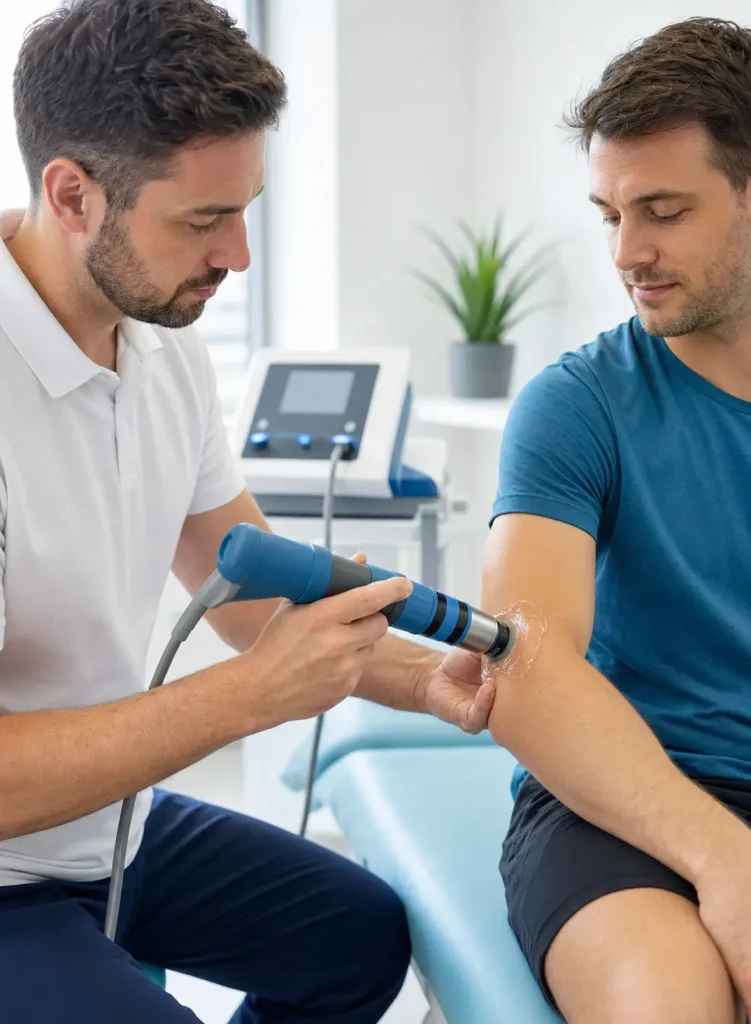
Despite its name, shockwave therapy does not involve an electrical shock. It uses acoustic waves delivered through a handheld applicator to targeted tissues.
Depending on the condition, these acoustic waves may support biological processes associated with tissue repair and healing. At Divine Care Physiotherapy, treatment is considered within the context of your symptoms, assessment findings and rehabilitation goals.
Because many conditions treated with shockwave therapy involve tendons, muscles, ligaments or joints, it may be incorporated into a broader musculoskeletal physiotherapy program.

How Shockwave Therapy May Support Recovery
The effects and suitability of treatment vary by condition. Your physiotherapist will determine whether shockwave therapy fits your rehabilitation plan.
Supports Tissue Healing
May stimulate biological processes associated with tissue repair and healing.
Collagen Production
May stimulate collagen production, an important structural protein in connective tissue.
Blood Vessel Formation
May encourage biological processes associated with new blood-vessel development.
Calcifications
May be considered for selected conditions involving calcific deposits.
Trigger Points
May be used for areas of muscle tightness and trigger points when appropriate.
Conditions Shockwave Therapy May Help Treat
Shockwave therapy may be considered for a range of musculoskeletal presentations. The treatment decision is based on assessment findings rather than the diagnosis name alone.
Plantar Fasciitis & Heel Pain
Often associated with heel or sole-of-foot pain, morning stiffness and difficulty walking or standing.
- Heel pain
- Plantar fascia-related symptoms
- Selected heel-spur-related pain
Tennis Elbow
Lateral elbow pain can affect grip and activities such as lifting or repetitive use.
- Outside elbow pain
- Reduced grip strength
- Activity-related discomfort
Chronic Tendinopathy
Shockwave therapy may be considered for selected tendon-related conditions.
- Achilles tendinopathy
- Patellar tendinopathy
- Rotator cuff tendinopathy
Calcific Tendinopathy
Selected calcific tendon conditions may be considered after a clinical assessment.
- Calcific deposits
- Condition-specific assessment
- Individualized treatment planning
Jumper’s Knee
Patellar tendon problems can occur in runners, jumping athletes and other active individuals.
- Patellar tendinopathy
- Sports-related loading
- Progressive rehabilitation
Shin Splints
Medial tibial stress syndrome can be associated with running, jumping and repetitive impact.
- Inner-shin pain
- Training-load factors
- Movement and strength rehabilitation
Hip Pain
Hip pain has many possible causes, so assessment is important before choosing treatment.
- Muscle or tendon-related presentations
- Functional limitations
- Movement-related contributors
Back Pain
Selected muscular or soft-tissue presentations may be considered for shockwave therapy.
- Exercise therapy
- Mobility work
- Functional rehabilitation
Shoulder Pain
Selected tendon-related and calcific shoulder conditions may be considered following assessment.
- Tendon irritation
- Movement limitations
- Strength and rehabilitation needs

What to Expect During a Shockwave Therapy Session
Your physiotherapist reviews your symptoms, medical history, examination findings, previous treatments, functional limitations and recovery goals.
A handheld applicator delivers acoustic waves to the targeted tissues. Treatment is adjusted according to your condition and tolerance.
Many people describe a tapping sensation. Sensitivity varies, and settings can be modified according to comfort and treatment goals.
Some people experience temporary soreness or increased symptoms during the first 24–48 hours. Your physiotherapist will provide activity and recovery guidance.
Shockwave Therapy Is Part of a Bigger Recovery Plan
Shockwave therapy is not presented as a guaranteed cure or as the only treatment required for every condition. It may be one component of a broader physiotherapy program.
Depending on your presentation, rehabilitation may include exercise therapy, mobility work, strengthening, activity modification, manual therapy and functional rehabilitation.
For active people, selected cases may also connect with sports physiotherapy. For strength and conditioning needs, kinesiology and active rehabilitation may also be relevant.

Is Shockwave Therapy Right for Everyone?
Shockwave therapy may not be suitable for every person or every condition. Your physiotherapist will assess whether it is appropriate and whether another treatment approach may be more suitable.
- Your condition and current symptoms
- Medical history and overall health
- Medications and relevant health concerns
- Recent procedures
- Pregnancy and other circumstances you should disclose
If additional medical evaluation is required, your physiotherapist may recommend consultation with your physician or another appropriate healthcare professional.

Assessment-Led Physiotherapy in Langley
At Divine Care Physiotherapy, shockwave therapy is offered as one component of a comprehensive physiotherapy approach.
- Thorough assessment
- Individualized treatment planning
- Evidence-supported physiotherapy techniques
- Exercise-based rehabilitation
- Functional recovery and progress monitoring
Shockwave Therapy in Langley — Frequently Asked Questions
Does shockwave therapy hurt?
Shockwave therapy is not necessarily painful. Some people experience discomfort depending on the treatment area and their sensitivity. Many describe the sensation as tapping within the tissues, and settings can be adjusted according to tolerance.
How many shockwave therapy sessions will I need?
There is no fixed number of sessions for everyone. Recommendations depend on the condition, severity and duration of symptoms, response to treatment and rehabilitation goals. Your physiotherapist will develop a plan based on assessment findings.
Do I need a doctor’s referral for shockwave therapy?
A doctor’s referral is generally not required to see a physiotherapist at Divine Care Physiotherapy. Some extended health plans may have separate requirements for reimbursement.
Are there side effects after shockwave therapy?
Some individuals experience temporary soreness or an increase in symptoms following treatment. These effects are generally short-term. Your physiotherapist will explain what to expect based on your individual treatment plan.
Who should not have shockwave therapy?
Shockwave therapy is not appropriate for every person or every condition. Suitability depends on medical history, current health status, the condition being treated and individual circumstances. An assessment is important before treatment.
Is shockwave therapy a cure on its own?
No treatment should be presented as a guaranteed cure for every condition. Shockwave therapy is one physiotherapy option that may be combined with exercise, movement retraining, load management and rehabilitation strategies where appropriate.
Ready to Address Persistent Pain?
Book a shockwave therapy assessment at Divine Care Physiotherapy in Thunderbird Village, Langley. Your physiotherapist can determine whether shockwave therapy is appropriate and explain the next step in your rehabilitation plan.