
TMJ Dysfunction Management in Langley
Individualized physiotherapy for jaw pain, clicking, locking, headaches, chewing discomfort and limited jaw movement. Your assessment looks at the jaw, surrounding muscles and the neck to understand the factors contributing to your symptoms.

When Jaw Movement Becomes Painful or Restricted
The temporomandibular joints (TMJs) connect the lower jaw to the skull. They are involved in everyday movements such as chewing, speaking, swallowing and yawning.
TMJ dysfunction, also called temporomandibular dysfunction (TMD), can involve the jaw joints, surrounding muscles, joint disc and movement patterns. Symptoms can affect eating, speaking, sleeping and other everyday activities.
At Divine Care Physiotherapy in Langley, treatment begins with an individualized assessment. Your physiotherapist considers the jaw as well as related areas such as the upper neck and posture when clinically relevant.

TMJ Symptoms Can Affect More Than the Jaw
TMJ dysfunction can present differently from one person to another. Some people notice one symptom, while others experience a combination of jaw, facial, head and neck-related symptoms.
Jaw & Facial Pain
Pain or tenderness around the jaw joint, cheek muscles, temples or side of the face.
Clicking & Popping
Joint sounds or popping sensations during opening or closing of the mouth.
Limited Opening
Stiffness, restricted movement or episodes of jaw locking that affect daily activities.
Jaw, Head, Ear & Chewing-Related Symptoms
Depending on the individual presentation, TMJ dysfunction may be associated with several types of symptoms.
Headaches
Jaw muscle tension and altered jaw mechanics may contribute to discomfort around the temples, forehead or side of the head.
Ear Discomfort
Some people report ear fullness, pressure or discomfort because the jaw joint sits close to the ear.
Pain While Chewing
Chewing may become uncomfortable, tiring or difficult, particularly with tougher foods or prolonged eating.
Jaw Stiffness
Stiffness or restricted movement may make opening the mouth, eating or dental care more difficult.
Neck-Related Symptoms
Neck mobility, posture and muscle tension may be considered when they appear relevant to the presentation.
Movement Changes
Altered opening patterns or coordination may be identified during a physiotherapy assessment.
Your Jaw Does Not Work in Isolation
The jaw and upper cervical spine have important muscular, neurological and biomechanical relationships. Changes in posture, cervical mobility or muscle tension may influence movement and loading around the jaw.
For this reason, a TMJ assessment may include:
- Jaw opening and movement patterns
- Cervical spine mobility
- Posture and movement habits
- Muscle function and tenderness
- Functional limitations and activity goals
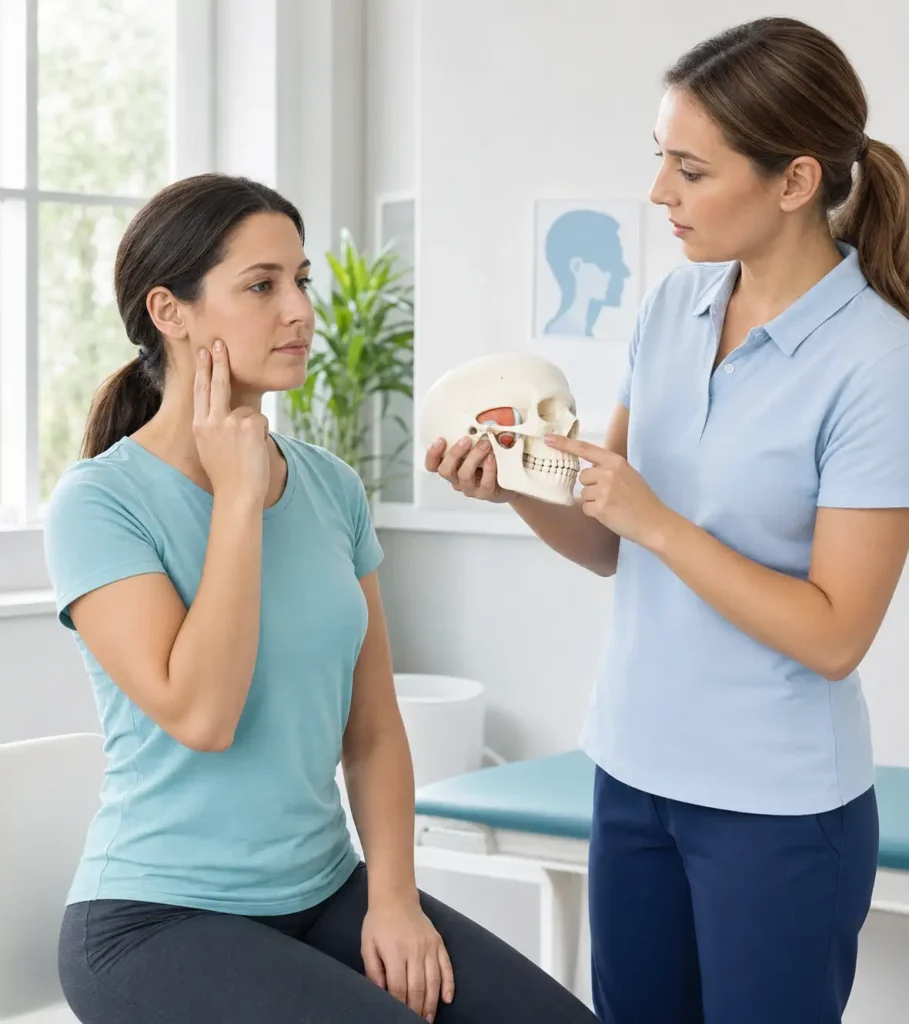
TMJ Dysfunction Can Have Multiple Contributing Factors
TMJ symptoms do not always come from a single cause. A physiotherapy assessment helps identify the factors that appear relevant to your individual presentation.
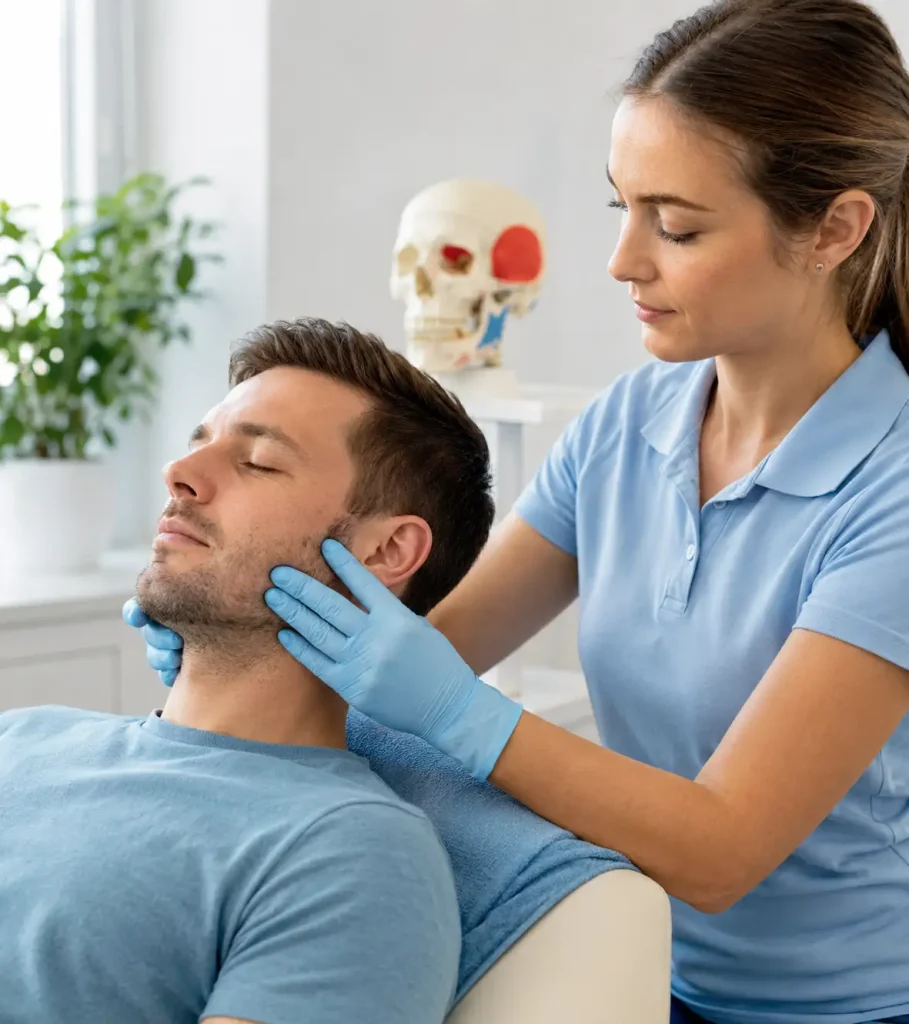
How We Manage TMJ Dysfunction
There is no single treatment approach for every TMJ presentation. Your physiotherapist develops a plan around your symptoms, assessment findings, functional limitations and goals.
Manual Therapy
Hands-on techniques may address jaw mobility, muscle tension, soft-tissue restrictions and cervical stiffness when appropriate.
Exercises
Individualized exercises may target jaw control, opening mechanics, movement coordination, neck mobility and stability.
Education
Practical guidance may cover jaw habits, clenching awareness, posture, activity modification and home exercises.
Care Is Selected According to Your Assessment
IMS / Dry Needling may be considered when muscular tension and trigger points appear relevant and the technique is clinically appropriate. Divine Care's IMS / Dry Needling service provides more information.
Class IV Laser Therapy is another service offered at Divine Care Physiotherapy. Where clinically appropriate, it may be considered as part of an individualized rehabilitation or pain-management plan. See Class IV Laser Therapy.
Not every technique is appropriate for every patient. Your physiotherapist determines the treatment approach based on the assessment and your individual needs.
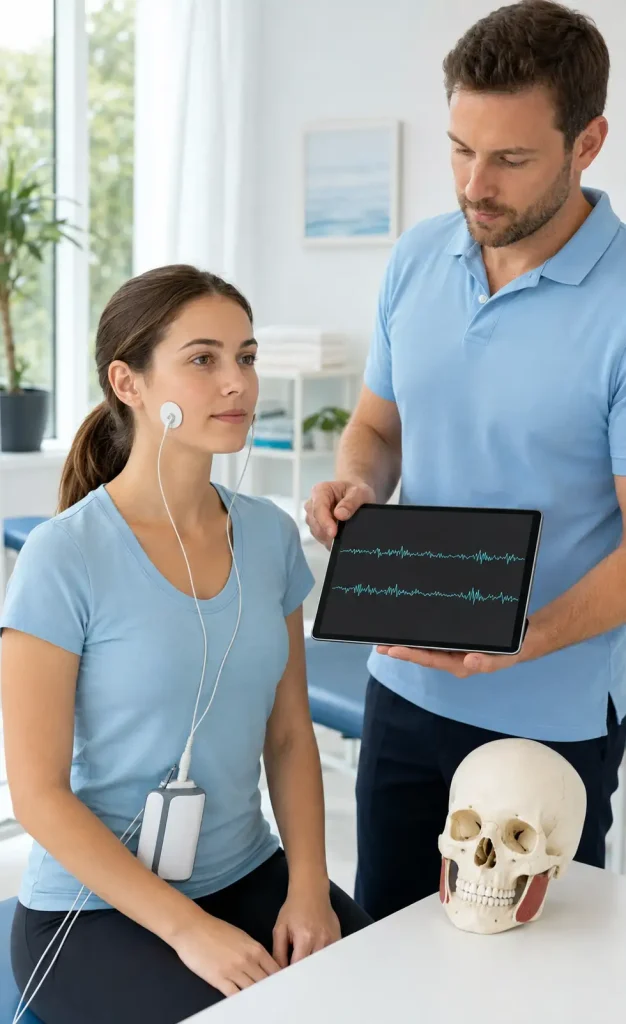
TMJ Care Can Involve Both Dental & Physiotherapy Support
Physiotherapists and dentists address different aspects of TMJ-related problems. Depending on the source of your symptoms, both may have an important role.
Dental Care May Address
Bite-related concerns, tooth wear, bruxism management, night guards, splints and dental conditions affecting the jaw.
Physiotherapy May Address
Jaw mobility, muscle tension, movement impairments, postural factors, neck-related contributors and functional rehabilitation.
When Collaboration Helps
If your physiotherapist identifies concerns that require dental or medical assessment, appropriate follow-up can be recommended.
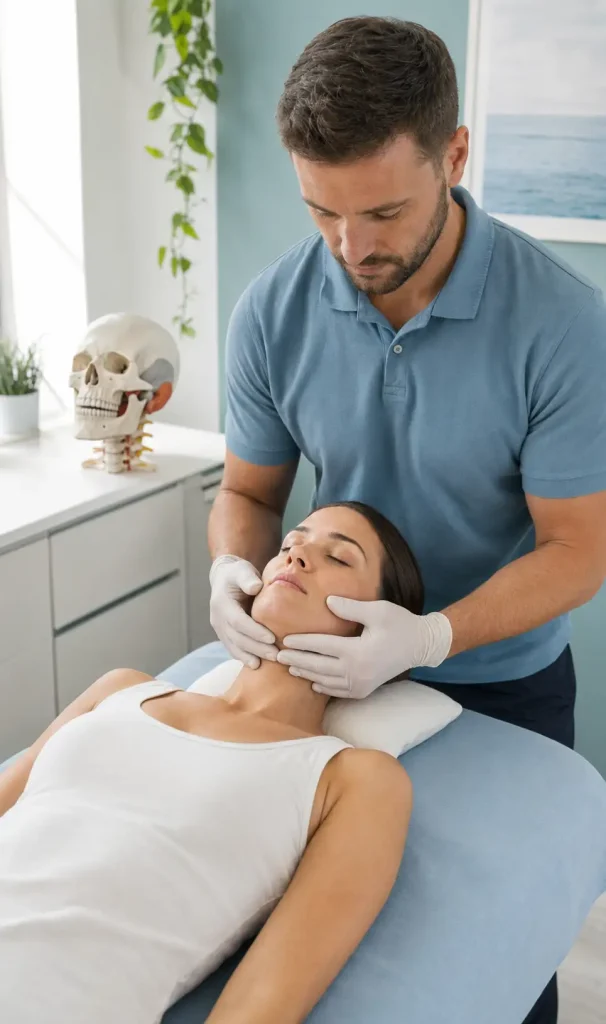
Jaw Pain After a Car Accident or Whiplash
Jaw symptoms can sometimes develop following a motor vehicle accident, whiplash, direct facial trauma or head injury. Symptoms may include jaw pain, clicking, limited mouth opening, headaches or neck pain.
Because whiplash can affect both the cervical spine and jaw region, your physiotherapist may assess how neck movement and function relate to your symptoms.
If your jaw symptoms began after an accident, an assessment can help determine whether physiotherapy-based rehabilitation is appropriate and whether further dental or medical follow-up should be considered.
Book Your Assessment →What to Expect During a TMJ Physiotherapy Assessment
Discuss Your Symptoms
Review your jaw pain history, symptoms, previous injuries, relevant health history and functional limitations.
Assess Jaw & Neck Function
Examine jaw opening, movement patterns, joint sounds, muscle tenderness, posture and cervical mobility.
Build Your Plan
Explain the assessment findings, contributing factors, treatment options and rehabilitation goals.
Progress & Reassess
Monitor jaw function and symptoms, adjust treatment and progress exercises as appropriate.
TMJ Management Within a Broader Physiotherapy Plan
TMJ dysfunction can overlap with musculoskeletal and neck-related movement problems. Where relevant, Divine Care may coordinate TMJ care with other physiotherapy services.
TMJ Dysfunction Management Questions
Can physiotherapy help TMJ and jaw pain?
Physiotherapy may help address musculoskeletal contributors to TMJ dysfunction, including joint stiffness, muscle tension, movement impairments, postural factors and neck-related contributors. Treatment is individualized around assessment findings and functional goals.
Do I need a doctor's or dentist's referral?
A referral is generally not required to see a physiotherapist at Divine Care Physiotherapy. If your assessment identifies concerns requiring dental or medical evaluation, appropriate follow-up recommendations can be provided.
How many TMJ physiotherapy sessions will I need?
The number of sessions varies between individuals. Factors can include symptom duration and severity, contributing factors, response to treatment and progress with home exercises. Your physiotherapist can provide a more individualized recommendation after assessment.
Why can TMJ problems cause headaches or ear symptoms?
The jaw joint and surrounding muscles are closely connected with structures around the head, neck and ears. Some people with TMJ dysfunction report headaches, ear discomfort, ear fullness or tinnitus-like symptoms. Your physiotherapist can assess whether jaw and neck factors may be contributing.
Should I see a physiotherapist or a dentist for TMJ?
Both may have important roles depending on the source of your symptoms. Dentists can address dental and bite-related concerns, while physiotherapists can address jaw movement, joint mechanics, muscle tension, neck involvement and postural contributors. Collaboration may be appropriate.
Is TMJ physiotherapy painful?
Treatment is adapted to your comfort level. Some techniques or exercises may produce mild temporary discomfort, but your physiotherapist will adjust treatment according to your symptoms and tolerance.
Can TMJ symptoms start after a car accident?
Jaw symptoms can sometimes develop following a motor vehicle accident, whiplash, direct trauma or head injury. An assessment can help determine whether the jaw and cervical spine are contributing to your symptoms.
Ready to Understand Your Jaw Pain?
If jaw pain, clicking, locking, headaches or chewing discomfort is affecting your everyday life, book an assessment at Divine Care Physiotherapy in Langley to discuss your symptoms and treatment options.
TMJ Dysfunction Management in Langley
D109 – 20159 88 Ave (Thunderbird Village), Langley, BC V1M 0A4.