
Vestibular Rehabilitation in Langley
Assessment and rehabilitation for dizziness, vertigo, imbalance and vestibular conditions — including BPPV.
Vestibular rehabilitation uses assessment, targeted treatment and exercise to address problems involving the vestibular system. Symptoms can include dizziness, vertigo, imbalance, nystagmus, visual instability and difficulty feeling steady during movement.
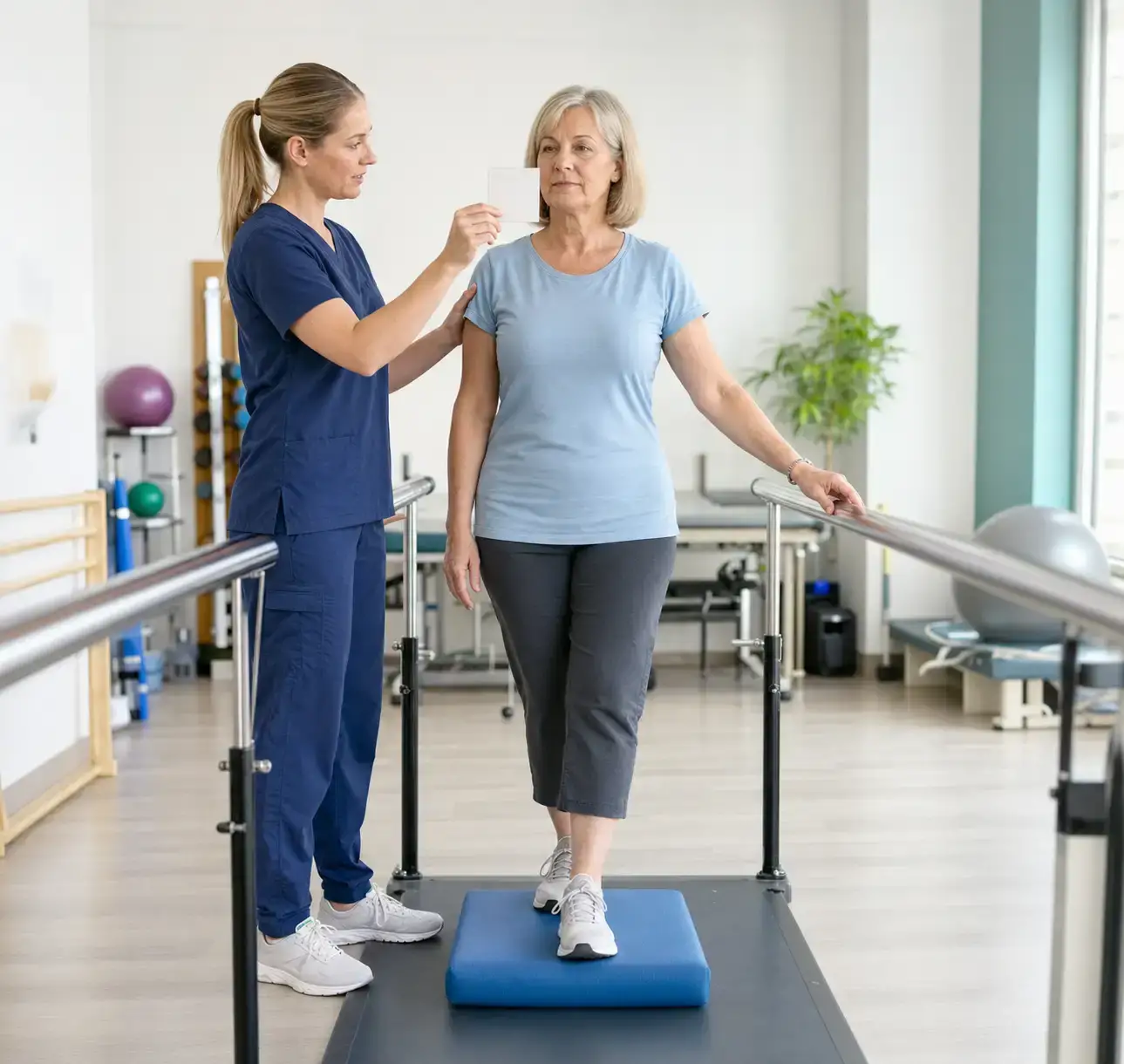
Understand the source of your symptoms
Targeted vestibular treatment where appropriate
Exercises for balance, movement and function
Comprehensive Vestibular & Balance Rehabilitation
Vestibular rehabilitation combines procedures used to assess, treat and evaluate vestibular-system problems. Dizziness can describe several sensations, including spinning, light-headedness, swaying or disorientation. Vertigo is one type of dizziness.
Vestibular impairment can affect balance, eye stability and confidence during everyday movement. At Divine Care Physiotherapy in Langley, assessment helps determine which rehabilitation approach is appropriate for your symptoms.
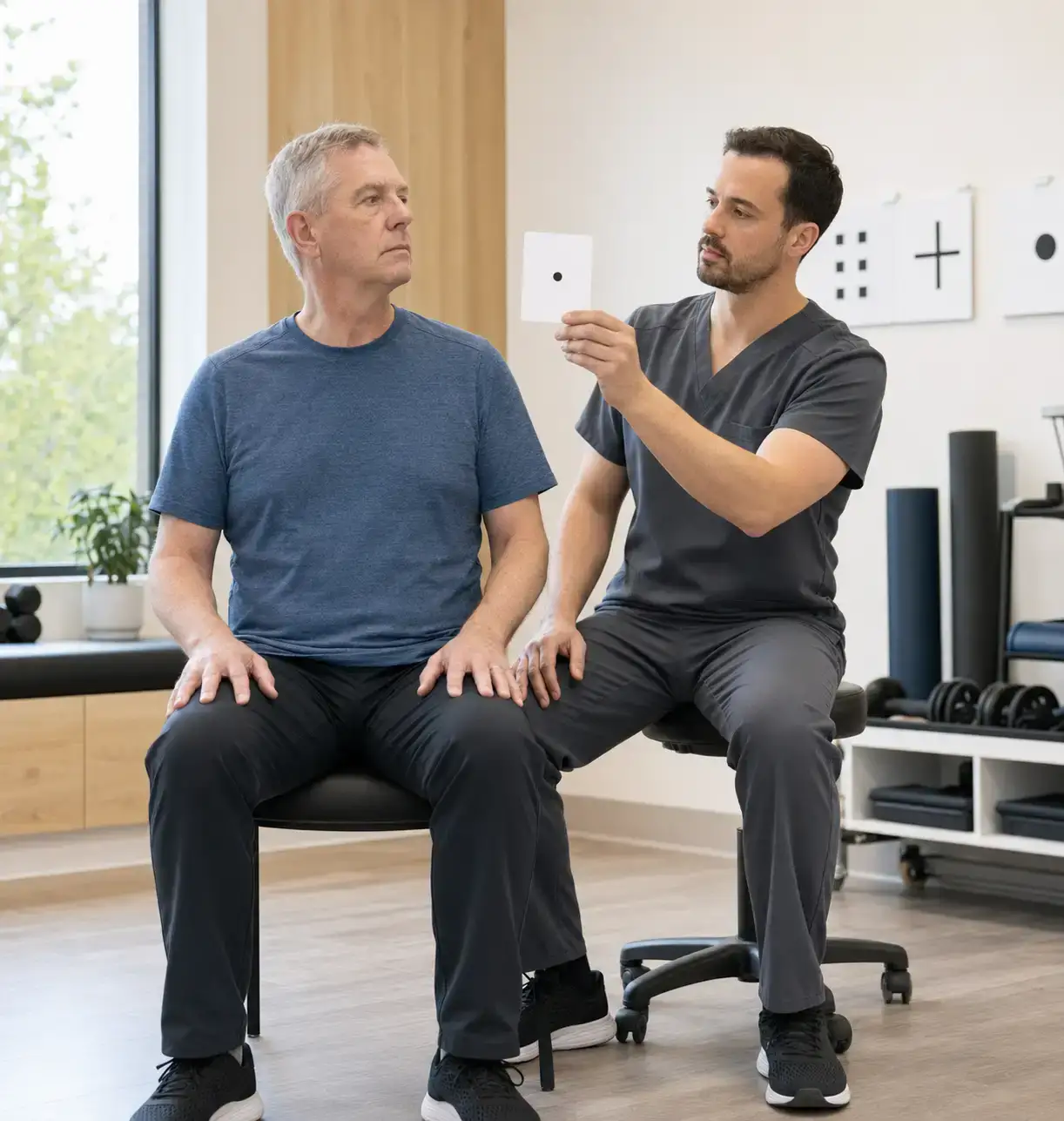
What Can Vestibular Rehabilitation Help With?
- Dizziness and light-headedness
- Vertigo and spinning sensations
- Balance difficulties and unsteadiness
- Visual instability during movement
- Vestibular problems following head trauma, whiplash or concussion
- BPPV and positional vertigo
- Difficulty returning to normal activities because of vestibular symptoms
BPPV Treatment in Langley
Benign Paroxysmal Positional Vertigo (BPPV) is a common vestibular condition involving displaced crystals within the inner-ear canals. Certain head movements can trigger brief episodes of vertigo, nausea or loss of balance.
BPPV can occur following head trauma, whiplash or concussion, although it can also occur without an obvious injury.
How BPPV Is Assessed
A trained physiotherapist can use positional tests such as the Dix-Hallpike or Roll Test while observing the resulting eye movement, known as nystagmus. The findings help identify the affected canal and guide treatment.
Canalith Repositioning
Once the affected canal and BPPV presentation have been identified, specific repositioning maneuvers can use controlled head movements and gravity to guide displaced crystals back toward their appropriate location.
After Treatment
Your physiotherapist may provide advice about movement, activity and exercises following treatment. Symptoms and recovery can vary, particularly when more than one canal is involved or following trauma.
Vestibular Exercises
When appropriate, rehabilitation exercises may be used alongside positional treatment to support balance, coordination, visual stability and recovery of normal activity.
Conditions Associated With Vestibular Impairment
The current Divine Care page identifies several conditions and situations that may be associated with vestibular-system impairment.
BPPV
Benign Paroxysmal Positional Vertigo can cause brief episodes of vertigo triggered by changes in head position.
Meniere’s Disease
A condition associated with vestibular symptoms that may include episodes of dizziness or vertigo.
Head Trauma & Whiplash
Head and neck injuries can be associated with vestibular symptoms and balance difficulties.
Concussion
Some people recovering from concussion experience dizziness, balance or visual-vestibular symptoms.
Vestibular Degeneration
Age-related changes to the vestibular system can contribute to balance and stability difficulties.
Vestibular Neuritis / Labyrinthitis
Vestibular disorders involving inflammation or irritation can affect balance and produce dizziness or vertigo.
Ototoxicity
Certain medications can affect the vestibular system and may contribute to balance or dizziness symptoms.
Barotrauma
Pressure-related injury can affect structures associated with hearing and balance.
Acoustic Neuroma
This condition can be associated with vestibular symptoms and requires appropriate medical evaluation.
What Your Vestibular Rehabilitation Journey May Look Like
Listen & Assess
Discuss your dizziness, vertigo, balance symptoms, history and activity limitations.
Identify
Use appropriate clinical assessment to understand the vestibular or balance problem.
Treat
Apply appropriate repositioning, vestibular treatment or rehabilitation exercises.
Progress
Build confidence and function through individualized exercises and activity progression.
Vestibular Rehabilitation Can Work Alongside Other Services
Balance and dizziness can overlap with neurological, concussion and general mobility concerns. Where clinically appropriate, your rehabilitation may connect with other Divine Care services.
Neurological Rehabilitation
For neurological conditions where dizziness, balance or mobility are part of a broader rehabilitation picture.
Explore Neurological Rehabilitation →Concussion Management
Vestibular rehabilitation may form part of a broader rehabilitation plan following concussion when vestibular symptoms are present.
Explore Concussion Care →Fall Prevention & Balance Rehab
Targeted rehabilitation for stability, mobility and confidence where fall risk or balance limitations are a concern.
Explore Balance Rehabilitation →Why Choose Divine Care for Vestibular Rehabilitation in Langley?
Assessment Before Treatment
Symptoms such as dizziness and vertigo can have different causes. Assessment helps guide the appropriate treatment pathway.
Individualized Care
Your treatment plan is based on your symptoms, clinical findings, activity needs and recovery goals.
Convenient Langley Location
Divine Care Physiotherapy is located in Thunderbird Village at D109 – 20159 88 Ave, Langley, BC V1M 0A4.
Frequently Asked Questions
Do I need my doctor’s referral for vestibular rehabilitation?
No. The current Divine Care page states that a doctor’s referral is not necessary. If your physiotherapist encounters something that may require medical evaluation, they can refer you to a doctor.
How many vestibular physiotherapy sessions will I need?
There is no fixed number for every person. The current clinic information states that treatment depends on the individual and the nature of the problem, with the rehabilitation plan developed around the goal of returning to previous activities.
Can BPPV be treated with physiotherapy?
Yes. When BPPV is appropriately assessed, canalith repositioning maneuvers can be used to treat the affected canal. Vestibular exercises may also be included when appropriate.
Can whiplash or concussion cause vestibular symptoms?
Yes. The current Divine Care information notes that people with whiplash, head injury or concussion can experience vestibular impairment.
What is the difference between dizziness and vertigo?
Dizziness is a broad term that can describe sensations such as light-headedness, swaying or disorientation. Vertigo is a type of dizziness involving a sensation of spinning or movement.
Book a Vestibular Rehabilitation Assessment in Langley
If dizziness, vertigo, imbalance or BPPV is affecting your daily activities, an assessment can help determine the appropriate next step.